You’ve decided your business needs a better website. Maybe your current one looks outdated, or you’re starting fresh and want to get it right from the beginning. Either way, you’re about to hand over a significant amount of money and trust to someone you probably just met.
Choosing the wrong web designer is a costly mistake, and I don’t just mean financially.
I’ve worked with clients who lost months of time, had their online presence held hostage, or ended up with a beautiful-looking site that did absolutely nothing for their business. Most of those headaches could have been avoided if they’d asked the right questions upfront.
Here’s what I’ve learned after years of building websites for local businesses in the Durham Region.
The Most Important Question Nobody Asks
Before you even start comparing designers, ask yourself this: who is going to manage your website after it launches?
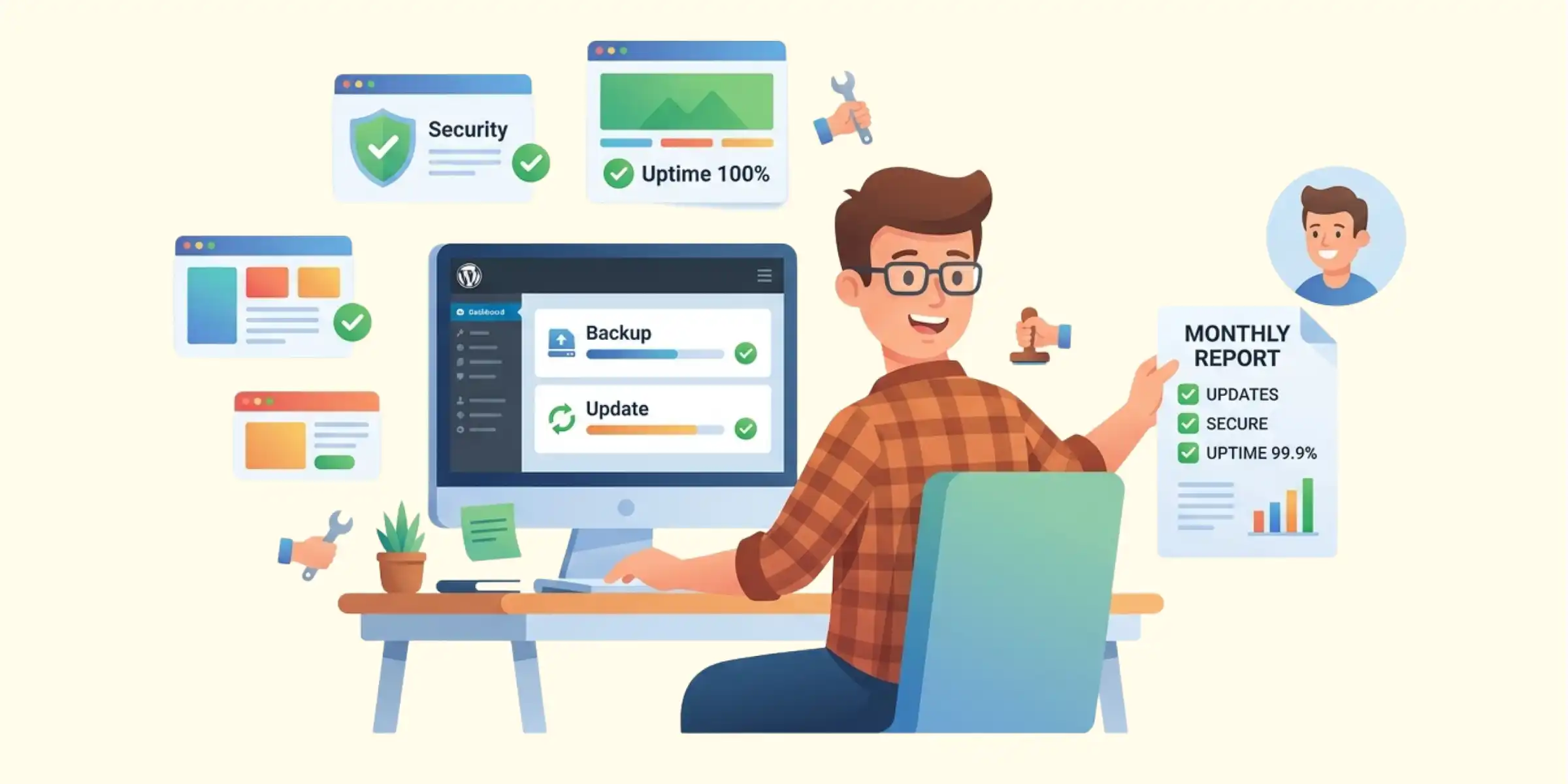
This question almost never comes up during the hiring process, and it should be the first thing on your list. A website is not a one-time project. It needs ongoing updates, security maintenance, content changes, and occasional troubleshooting. If you don’t have a plan for that before you sign anything, you’re setting yourself up for problems down the road.
Some designers offer ongoing maintenance packages. Others hand over the keys and move on. Neither approach is wrong, but you need to know which one you’re getting and whether it fits how your business actually operates.
If you’re planning to update the site yourself, make sure the designer builds on a platform you can actually use. If you want someone else to handle it, get that agreement in writing with clear pricing before the project starts.
Questions You Should Be Asking Every Designer You Interview
Most people walk into a conversation with a web designer and ask two things: how long will it take, and how much does it cost. There’s nothing wrong with those questions, but they’re not going to tell you much about whether this person is actually the right fit.
Here are three questions that will.
What Are the Ongoing Costs Beyond the Build?
A website has on-going costs that many business owners don’t fully understand until the invoice arrives. Your designer should be able to clearly explain what you’ll be paying for once the site is live, including:
- Web hosting
- Domain name registration and renewal
- Premium plugins or themes
- Maintenance or support fees
Some designers bundle these into a monthly package. Others leave it entirely to you. What matters is that you know exactly what you’re getting into before you commit. If a designer can’t give you a straight answer on this, that’s a red flag.
How Many Revisions Are Included?
Design is subjective. You might love the first concept your designer shows you, or you might need several rounds of changes before it feels right. Either way, you need to know how that process works and what it costs.
Some designers include unlimited revisions up to a certain point in the project. Others give you one or two rounds and charge hourly after that. There is no universal right answer, but you need to know the rules before work begins. Getting hit with unexpected revision fees halfway through a project is a frustrating experience that is completely avoidable.
Will There Be a Contract?
This one surprises people, but some web designers still work without a formal contract. That is a problem for both parties, but especially for you as the client.
A proper contract should outline the scope of work, the payment schedule, the timeline, what happens if the project goes over scope, and who owns the final files and assets. If a designer hesitates when you ask about a contract, or tells you they don’t use one because they prefer to keep things simple, walk away. A contract protects you. Any professional designer should want one in place.
A Story About Domain Names (And Why You Need to Read This)
I want to share something that I’ve seen happen more than once, because it’s the kind of thing that can cause serious damage to a business and it’s completely preventable.
I’ve had clients come to me after working with a previous designer who registered their domain name on their behalf. On the surface, that sounds helpful. In reality, the designer registered the domain in their own name, not the client’s.
When the relationship ended, the client had no access to their own domain. The website address their customers had been using, that they had printed on business cards and listed in directories, was owned by someone else. Getting it back required legal intervention, and in some cases it simply wasn’t possible without starting over with a new domain.
When you hire a web designer, make absolutely sure that the domain is registered in your name, using your email address and your payment information. You should have full login access to the registrar account from day one. The same principle applies to your hosting account, your Google Business Profile, and any other digital asset tied to your business. You should own all of it.
Pretty vs. Effective: Understanding the Difference
One of the things I see constantly in this industry is designers who are more focused on impressing you than on building something that actually works for your business. You can usually spot this pretty quickly.
Sites designed to impress tend to have a lot going on. Heavy animations, full-screen video backgrounds, elaborate transitions, elements sliding in from every direction. They look flashy in a presentation, and a lot of business owners get excited seeing that kind of design for the first time.
The problem is that those sites are almost always slow. And a slow website is a liability. Research consistently shows that visitors leave if a page takes more than a few seconds to load. If your site is slow, you are losing potential customers before they even see what you offer.
A website built to convert customers looks different. It tends to be cleaner and less cluttered. The focus is on communicating clearly, making it easy for visitors to find what they need, and guiding them toward taking action. It loads quickly on both desktop and mobile. It works.
When you’re evaluating a designer’s portfolio, don’t just look at how the sites look. Visit them. Test how fast they load on your phone. See how easy they are to navigate. That will tell you a lot more than the visual design alone.
One Last Thing About Price
I’m going to be direct with you here, because I think it matters.
If the first question out of your mouth when you talk to a web designer is “how much does it cost,” you are probably approaching this the wrong way. I’m not saying price doesn’t matter, it absolutely does. But leading with price before you’ve had a conversation about your goals, your business, and what you actually need usually signals one thing: you’re looking for the cheapest option.
The cheapest option is almost never the right one when it comes to your website. Your website is often the first impression a potential customer gets of your business. It works for you around the clock. It either builds trust or it doesn’t. Trying to cut corners with cheap website design typically ends up costing more in the long run, whether that’s through a redesign, lost customers, or the kinds of ownership problems I described earlier.
The right question to lead with is not “how much does this cost” but “is this the right person to build something that will actually help my business.” Price is part of that conversation, but it shouldn’t be the first part.
Finding the Right Fit
The best working relationships I’ve had with clients over the years have one thing in common. The client trusted me to make decisions based on what was best for their business, not just what looked good in a screenshot. They came to the process with a clear sense of their goals, they asked smart questions upfront, and they understood that a website is an investment, not an expense.
That kind of client gets better results. Not because I work harder for them, but because we’re working together toward the same outcome.
If you’re a local service-based business looking for a web designer who will build you a website that actually performs, ask the questions in this post. Make sure you own your domain. Get a contract. Think about who manages the site after launch. And don’t choose based on price alone.
Do that, and you’ll be well ahead of most business owners before the first conversation even starts.

Larry is a local web designer located in Oshawa, Ontario. He specializes in building WordPress websites for service-based businesses in Durham Region, and is committed to helping his clients outrank their competition.