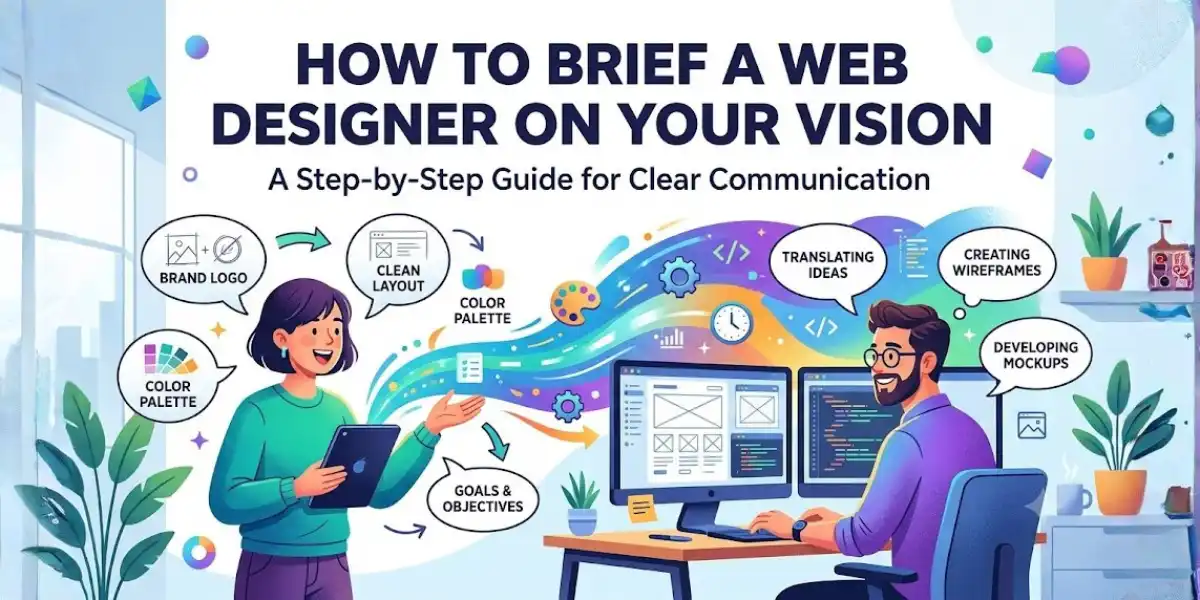
When you brief a web designer on your vision, you set the foundation for the entire project.
Most projects don’t go sideways because of bad design; they go sideways because the client and the designer were never on the same page. A weak web design brief leads to delays, revisions, and a website that doesn’t actually do what you needed it to do.
As a web designer, the first thing I ask every new client is simple: why do you want this website?
That one question tells me more than most people realize. The answer shapes everything that affects the design and development of your website.
A Web Design Brief Starts with Why
Before worrying about design details, clarify the purpose behind your project. When you brief a web designer effectively, you establish the goals that drive every design choice.
- Why do you want a new website, or why are you redesigning your existing one?
- What are you hoping it will do for your business?
- Who is your target customer?
- What does success look like six months after launch?
When a client has clear answers to those questions, the project moves fast. When they don’t, we spend the first few weeks figuring out what we should have known before we started.
Have a budget in mind. How much are you willing to send on your web design project. It helps your web designer know what’s possible and which trade-offs to make.
The Biggest Mistake When Briefing A Web Designer
Here’s what I see more often than anything else. Most clients are focused entirely on how they want the website to look. They want a fancy carousel, and animations. They want to “Make It Pop!”
Those things aren’t wrong to want, but they’re secondary. First, your site must speak to your customer’s needs and solve their problems. A beautiful website that doesn’t connect with the right people is just an expensive digital brochure.
Content Comes First
The content you provide tells me everything about your business.
- Who your customers are.
- What problems you solve.
- What makes you different from the competitor down the street.
That is all part of your content.
When a client provides well-organized content, the design process flows naturally. Without it, the web designer is guessing. And guessing leads to a website that could belong to any business, not specifically yours.
Gather the following before your briefing:
- Your services or product descriptions
- Your target audience and what they care about
- Your key differentiators
- Any existing copy, brochures, or marketing materials
- Photos, logos, and brand assets
Having the content upfront helps me design a website that will convert customers.
A Real-World Example of What Happens Without a Plan
I had a client who, partway through the project, told me they didn’t want me to use any of the product photos and videos they had already provided. They had hired a photographer to shoot new content instead.
The problem was, the new content wasn’t ready yet. We had to pause the entire design phase and wait. What could have been a smooth, focused project turned into a stop-and-start experience.
What a Good Web Design Brief Looks Like
You don’t need a 6-page document. You need clear answers to the right questions. Here’s what I’d want from every client before we start.
Your goals. What is this website supposed to accomplish? More calls, more bookings, more online sales? Be specific.
Your target customer. Who are they? What do they search for? What problems are they trying to solve when they land on your site?
Your budget. An honest number helps everyone. It sets expectations and helps your designer recommend the right solution.
Your content. Copy, images, videos, branding. Have it ready. Or let your designer know upfront what’s still in progress.
Your timeline. If you have a hard deadline, say so at the start.
What If You Have No Idea What You Want?
This is more common than you’d think. Most business owners aren’t designers. You shouldn’t have to know what you want before you brief a web designer..
Here’s what works well. I pull up a few of your top competitors’ websites with the client and go through them together. I ask two questions: what do you like about this, and what do you not like? That conversation is often more useful than any design brief. It reveals what you respond to visually, what tone feels right, and what you want to avoid.
Then I ask two more questions that I’ve found to be clarifying. What would make this new website a success in your mind, and what would make it a failure?
The answers to those questions tell me what actually matters to you. That’s where a project finds its direction.
The Designer’s Job Is to Ask the Right Questions
Your web designer should be helping you build this clarity. A good briefing process is a conversation, not a form to fill out.
You can make that conversation a lot more productive. Make sure you have your goals defined, your budget in mind, and your content ready.
The more clearly you can communicate what your business does and who it serves, the better. It will help your designer translate that into something your customers will actually connect with. That’s when websites work.

Larry is a local web designer located in Oshawa, Ontario. He specializes in building WordPress websites for service-based businesses in Durham Region, and is committed to helping his clients outrank their competition.